Understanding the TMJ-Vestibular Connection: Vertigo, Dizziness, and Bite Stabilization
Millions of people worldwide suffer from vestibular disorders — conditions that cause vertigo, dizziness, and balance problems. Common diagnoses include benign paroxysmal positional vertigo (BPPV), vestibular migraine, Ménière’s disease, and persistent postural-perceptual dizziness (PPPD). What many patients and clinicians may not realize is that the temporomandibular joint (TMJ) and dental occlusion can play a meaningful role in these conditions. A growing body of research in otoneurology and neurotology supports an association between TMJ dysfunction and vestibular symptoms, opening the door to complementary treatment approaches including TMJ care and bite stabilization.
The Anatomical and Neurological Basis
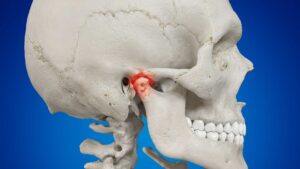
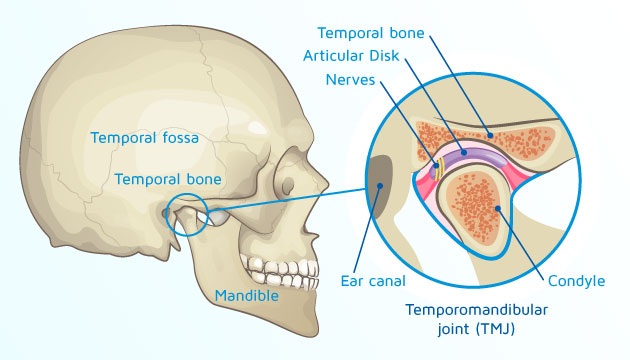
The TMJ sits in close anatomical proximity to the structures of the inner ear. Beyond this physical relationship, there are direct neuronal connections between the trigeminal nerve — which controls jaw function — and the vestibular nuclei, which regulate balance and spatial orientation. Animal studies have confirmed these neural links, and human experiments have demonstrated that disturbing trigeminal nerve input (e.g., through mandibular nerve anesthesia) causes measurable postural deviation. Experimental jaw muscle pain has also been shown to increase neck muscle EMG activity, reflecting the tight neural coupling between the masticatory, cervical, and vestibular systems.
These neuroanatomical interconnections explain why a pathological condition in the TMJ or masticatory system can alter vestibular function, and vice versa. The stomatognathic system — comprising the TMJ, teeth, masticatory muscles, and associated ligaments — contributes to postural balance regulation, with a greater contribution under challenging balance conditions such as unstable surfaces or fatigue.
TMJ Disorders and Vestibular Symptoms: The Clinical Evidence
Otological symptoms are remarkably prevalent in patients with temporomandibular disorders. In a prospective study of 251 patients, significant associations were found between TMD severity and vertigo (p < 0.001), dizziness (p = 0.001), tinnitus (p < 0.001), and subjective hearing loss (p < 0.001). The higher the severity of TMD, the greater the incidence of these symptoms.
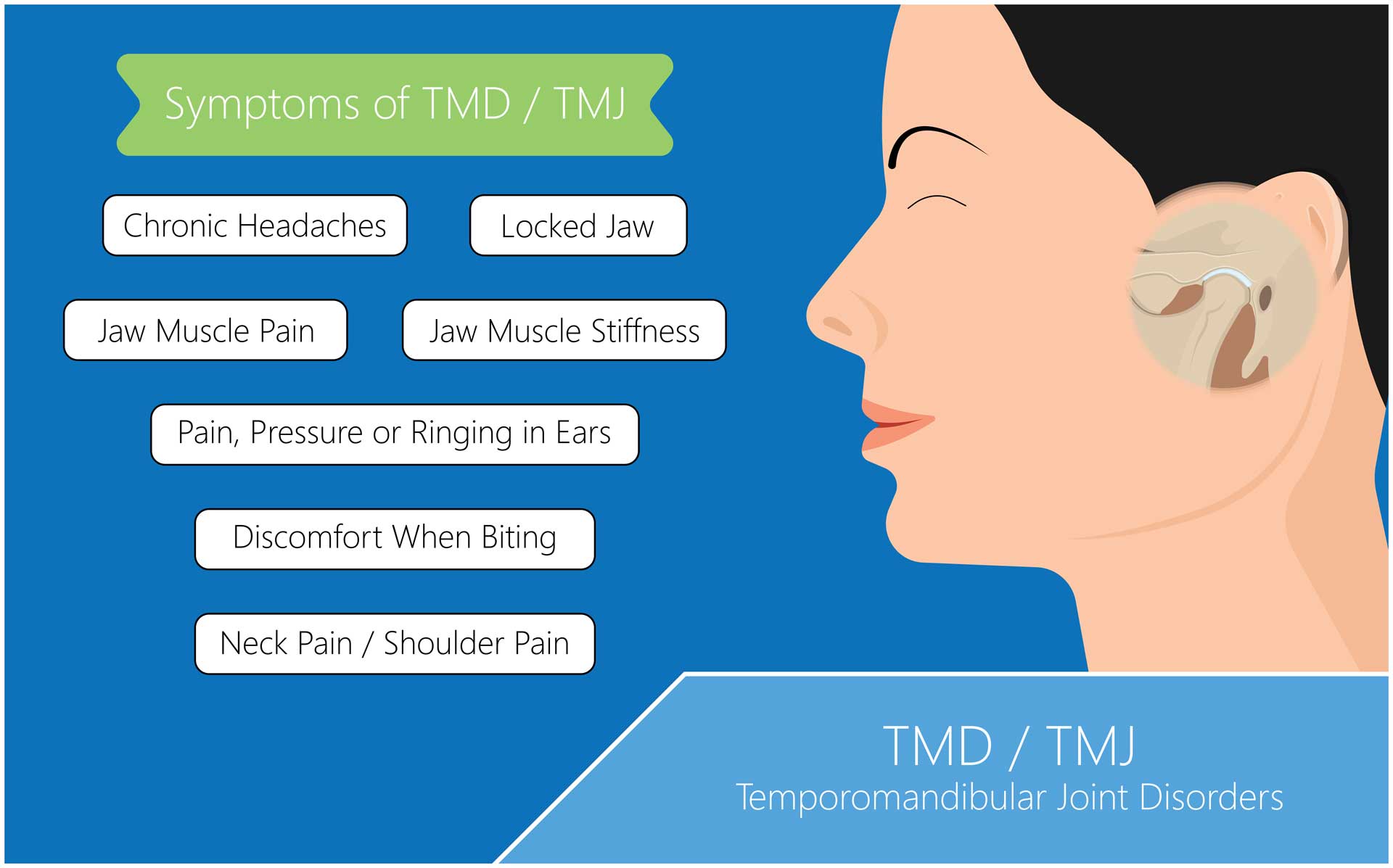
The New England Journal of Medicine recognizes dizziness, ear pain, tinnitus, and ear stuffiness as common associated symptoms of temporomandibular disorders. The prevalence of otological symptoms in patients with TMD may reach as high as 85%, compared to 10–31% in the general population.
TMJ Dysfunction, Migraine, and Vestibular Migraine
Vestibular migraine is the second most common cause of vertigo. A 2026 systematic review and meta-analysis confirmed a strong, bidirectional association between migraine and TMD: patients with painful TMD are significantly more likely to develop chronic migraine (OR = 30.1) and episodic migraine (OR = 3.7). The shared pathophysiology may involve peripheral sensitization in musculoskeletal structures, central sensitization, and common neurotransmitter pathways including CGRP and substance P.
Since vestibular migraine, Ménière’s disease, and BPPV frequently co-occur with migraine, managing TMD may represent an important strategy for reducing migraine triggers and, by extension, vestibular migraine episodes.
BPPV and TMJ Mobilization
A 2026 randomized controlled trial evaluated TMJ and soft tissue mobilization as an adjunct to standard canalith repositioning maneuvers in 41 adults with BPPV. While both groups improved in dizziness-related outcomes, the TMJ mobilization group showed significantly greater improvement in balance performance during tandem stance (mean difference 3.90 seconds; 95% CI 1.70–6.10; p = 0.001) and temporomandibular function (p < 0.001). These findings suggest that addressing TMJ dysfunction alongside standard BPPV treatment may enhance postural stability.
TMD, Cervicogenic Dizziness, and Persistent Postural-Perceptual Dizziness
Patients with both TMD and cervical spine disorders demonstrate worse postural performance than those with either condition alone, as measured by static posturography. This overlap is clinically relevant because cervicogenic dizziness and PPPD share features of chronic, non-specific dizziness that may be perpetuated by musculoskeletal dysfunction.
While PPPD treatment has traditionally focused on vestibular rehabilitation, cognitive behavioral therapy, and SSRIs/SNRIs, the role of TMJ care in this population remains underexplored and warrants further investigation.
Bite Stabilization and Occlusal Splint Therapy for Vestibular Symptoms
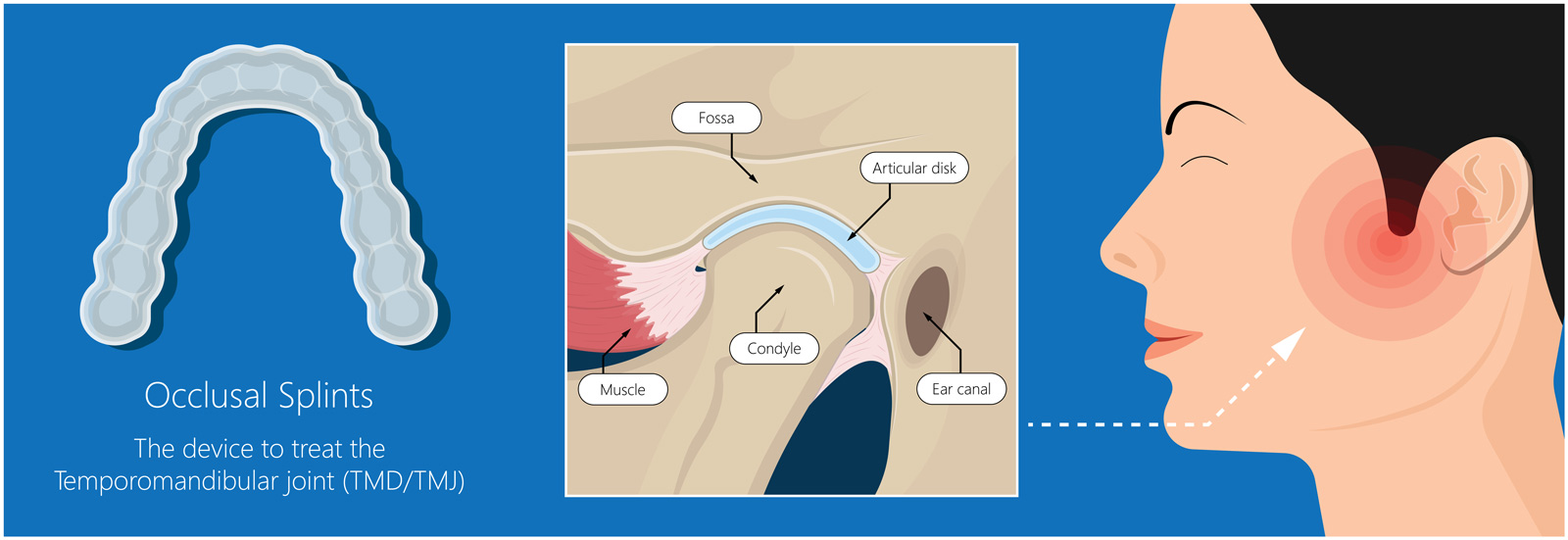
Occlusal splints — devices designed to stabilize the bite and reduce TMJ loading — have shown promise in reducing otological symptoms associated with TMD. Studies have reported resolution rates of up to 100% for vertigo, 63% for dizziness, and 70% for ear pain following TMD therapy that included splint use. A systematic review found that both occlusal and non-occlusal splints improved secondary ear pain in TMD patients.
A 2025 systematic review concluded that the combination of manual therapy and jaw/neck exercises potentially reduces otological symptoms in TMD patients, though the overall certainty of evidence was rated as very low, highlighting the need for larger, higher-quality trials.
Key Takeaways for Patients and Clinicians
- Vestibular symptoms such as vertigo, dizziness, and imbalance are significantly more common in patients with TMJ disorders.
- Neuroanatomical connections between the trigeminal nerve and vestibular nuclei provide a biological basis for the TMJ-vestibular link.
- TMJ mobilization may improve balance outcomes when added to standard BPPV treatment.
- Migraine and TMD share a strong bidirectional relationship, with implications for vestibular migraine management.
- Bite stabilization with occlusal splints may reduce vertigo, dizziness, and ear-related symptoms in patients with TMD.
- Multidisciplinary care — integrating otoneurology, neurotology, and TMJ specialists — may optimize outcomes for patients with co-existing vestibular and temporomandibular disorders.
The Bottom Line
The connection between TMJ disorders and vestibular conditions is supported by anatomical, neurological, and clinical evidence. For patients with vertigo, vestibular migraine, BPPV, Ménière’s disease, or PPPD who also have signs of TMJ dysfunction, evaluation and management of the temporomandibular joint — including bite stabilization — should be considered as part of a comprehensive treatment plan. Further research is needed to establish definitive causal relationships and optimal treatment protocols.
If dizziness, ear fullness, or balance problems have never fully made sense — and you also notice jaw clicking, clenching, or facial tension — an evaluation of how your jaw, bite, and neck function together may add a missing piece. Learn about our evaluation or request an appointment.
References
- Dental occlusion and body balance: A question of environmental constraints?. Julià-Sánchez S, Álvarez-Herms J, Burtscher M. Journal of Oral Rehabilitation. 2019;46(4):388-397. doi:10.1111/joor.12767.
- Otological Findings and Other Symptoms Related to Temporomandibular Disorders in Young People. Maciel LFO, Landim FS, Vasconcelos BC. The British Journal of Oral & Maxillofacial Surgery. 2018;56(8):739-743. doi:10.1016/j.bjoms.2018.08.005.
- Temporomandibular Disorders. Scrivani SJ, Keith DA, Kaban LB. The New England Journal of Medicine. 2008;359(25):2693-705. doi:10.1056/NEJMra0802472.
- Effect of Temporomandibular Disorder Therapy on Otologic Signs and Symptoms: A Systematic Review. Stechman-Neto J, Porporatti AL, Porto de Toledo I, et al. Journal of Oral Rehabilitation. 2016;43(6):468-79. doi:10.1111/joor.12380.
- Exploring the Bidirectional Association Between Migraine and Temporomandibular Disorders: A Systematic Review and Meta‐Analysis. Dias MF, Ferro AC, Spavieri JHP, Ferrisse TM, Gonçalves DAG. Journal of Oral Rehabilitation. 2026;53(3):794-806. doi:10.1111/joor.70110.
- Vestibular Migraine: Clinical Aspects and Pathophysiology. Furman JM, Marcus DA, Balaban CD. The Lancet. Neurology. 2013;12(7):706-15. doi:10.1016/S1474-4422(13)70107-8.
- The Role of Temporomandibular Joint Mobilization in the Management of Benign Paroxysmal Positional Vertigo: Randomized Controlled Trial. Güler D, Araci A, Günizi H, Kar M. Scientific Reports. 2026;16(1):19172. doi:10.1038/s41598-026-52637-x.
- Effectiveness of Manual Therapy and Exercise Therapy on Otological Symptoms of Individuals With Temporomandibular Disorders: A Systematic Review. Tavares LF, Calixtre LB, Pelai EB, et al. Disability and Rehabilitation. 2025;47(15):3794-3808. doi:10.1080/09638288.2024.2435525.
Header illustration: the internal ear (vestibular apparatus and cochlea) — Blausen.com staff (2014), “Medical gallery of Blausen Medical 2014,” WikiJournal of Medicine — CC BY 3.0.